
You Don’t Have to Be an Expert to Lead an Incredible Mission Trip
Maybe you’re a youth pastor who’s been asked to organize your church’s next mission trip.
Or perhaps you’re a Christian school teacher, administrator, or coach who would love to take students on a mission trip but has never organized one before.
You love the idea of giving young people an opportunity to serve others, experience a different community or culture, and grow in their faith.
But then the questions begin.
Where will everyone stay? How will we get around? What ministry will we do? How do we handle fundraising, medical needs, transportation, and safety?
And perhaps the biggest question:
Am I really qualified to lead a mission trip?
Here’s some encouragement.
You don’t have to be a missions expert to lead an incredible trip.
After years of serving in youth ministry, teaching, coaching, and helping organize mission trips, one thing has become clear: some of the most meaningful experiences happen when people are willing to step outside their comfort zones and trust God with something new.
The key is preparing well, surrounding yourself with dependable people, and keeping the purpose of the trip at the center of everything you do.
Here are seven important principles, followed by a practical mission trip planning guide to help you get started.
1. Start With the Purpose, Not the Details
It’s tempting to begin planning a mission trip by focusing on destinations, flights, fundraising, and accommodations.
Those details matter, but they’re not the reasons you’re going.
You’re going to serve others, share the love of Jesus Christ, build meaningful relationships, and help participants grow spiritually.
For youth pastors, mission trips can help students become more confident sharing their faith and serving outside their normal church environment.
For Christian school teachers and administrators, mission trips can extend classroom learning into real-world experiences involving compassion, leadership, teamwork, and Christian service.
Before choosing a trip, ask:
What do we hope God accomplishes through this experience?
Keep that purpose at the center of your planning.
2. You Don’t Have to Organize Everything Yourself
One of the most important lessons for a first-time mission trip leader is this:
Your primary responsibility is leading your people, not personally managing every logistical detail.
Youth pastors, teachers, administrators, and coaches already have plenty of responsibilities.
An experienced mission organization can help coordinate lodging, meals, local transportation, ministry arrangements, and on-location leadership.
At Thirst Missions, our goal is to handle these details so group leaders can focus on caring for students, developing relationships, and providing spiritual leadership.
Even with excellent logistical support, however, there are important responsibilities within your own group.
And those responsibilities should be shared.
3. Build a Strong Team of Adult Leaders
One of the biggest mistakes a new mission trip leader can make is trying to do everything personally.
Instead, recruit dependable adults and give them specific responsibilities.
Assign someone to coordinate prayer, another to organize fundraising, and another to manage parent communication.
Designate leaders for medical preparation, photography, worship, and individual ministry projects.
Someone should also coordinate the post-trip reunion and help students continue serving after returning home.
On smaller teams, adults can fill multiple roles.
The goal isn’t to create unnecessary positions. It’s to make sure important responsibilities are covered.
A strong leadership team allows everyone to contribute while freeing the group leader to focus on the people and the ministry.
4. Prepare Students for Ministry, Not Just Travel
It’s easy to spend months preparing for a mission trip by raising money, attending meetings, and completing paperwork.
But spiritual preparation is just as important.
Talk about humility, compassion, teamwork, and respecting the people and communities you’ll encounter.
Help students understand that ministry isn’t about arriving somewhere with all the answers.
It’s about building relationships, listening, serving, encouraging, and sharing Christ’s love.
Before departure, practice sharing testimonies, leading children’s activities, praying together, and working as a team.
Some students are natural leaders. Others are quieter. Everyone has something to contribute.
You don’t need a team full of outgoing students. You need a team willing to serve.
5. Expect Some Surprises—and Enjoy the Experience
Nearly every experienced mission trip leader will tell you that not everything goes according to plan!
There may be lost luggage, schedule changes, transportation challenges, or unexpected adjustments.
Sometimes those moments become the most memorable parts of a trip.
Preparation and safety remain essential. Your team needs appropriate supervision, medical information, emergency procedures, and clear expectations.
But once those things are in place, don’t let unexpected changes ruin the experience.
Your students will watch how you respond.
Stay positive. Be flexible. Lead with confidence.
And remember to enjoy the trip yourself!
6. Remember That You’re Teaching Even When You’re Not Teaching
Young people learn an incredible amount simply by watching their leaders.
They notice how you respond when things get difficult, how you treat people, and whether you’re willing to do the less glamorous jobs.
On a mission trip, you have an opportunity to model servant leadership every day.
Jesus demonstrated this when He washed His disciples’ feet.
In John 13:15, Jesus said:
“I have set you an example that you should do as I have done for you.” (NIV)
You don’t have to be perfect.
But you can demonstrate humility, patience, compassion, and a willingness to serve.
Some of the most important lessons your students learn may come from watching you.
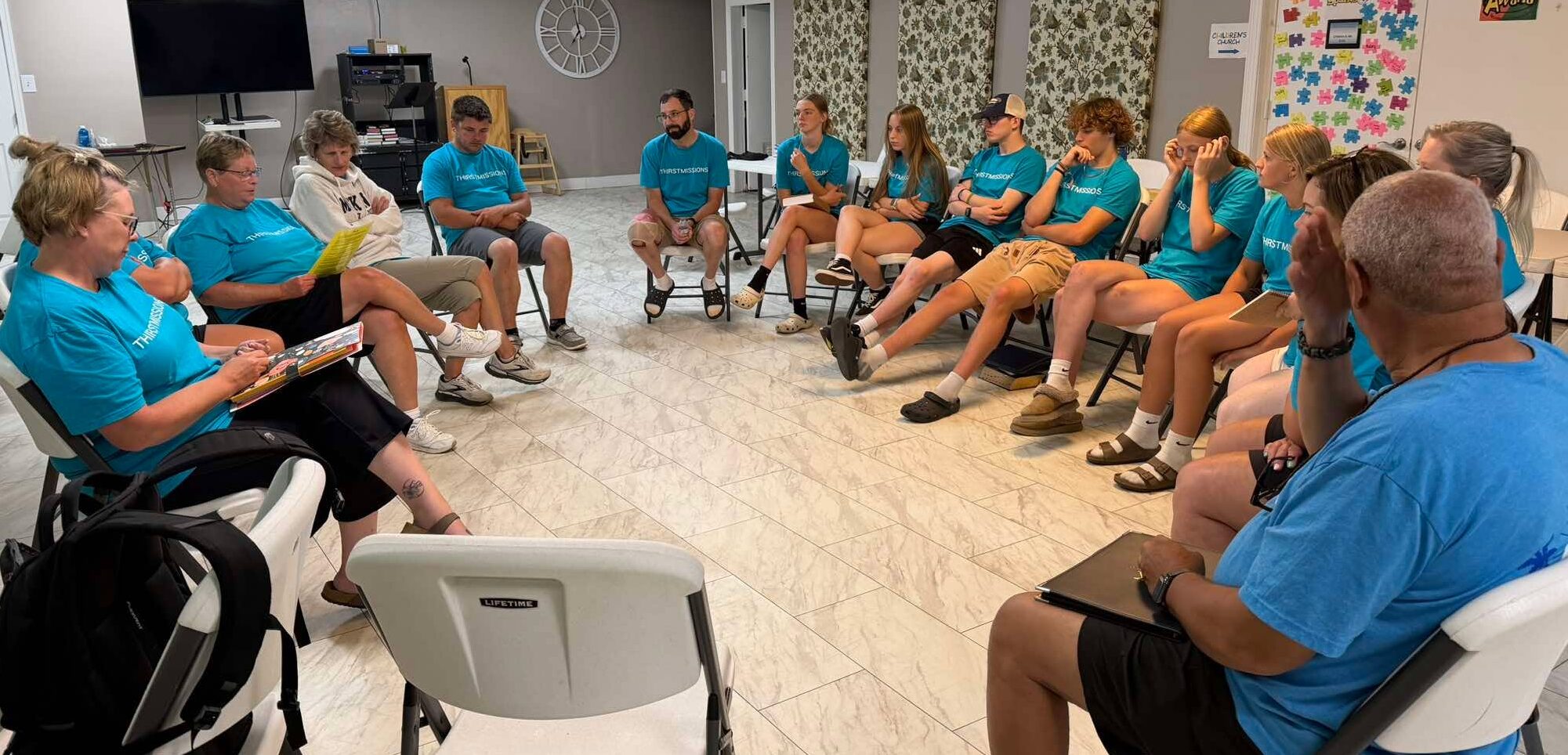
7. Make Evening Worship, Prayer, and Reflection a Priority
This is one of the most important ways a mission trip becomes something far more meaningful than another group trip.
A mission trip isn’t simply a vacation with service projects added to the schedule.
It’s an opportunity to build relationships, grow spiritually, and experience Christian community.
And much of that growth happens when the ministry day is over.
Imagine students gathering together after a day of serving. They’ve worked hard, met new people, experienced unfamiliar situations, and perhaps been challenged in unexpected ways.
Now they have an opportunity to process those experiences together.
A well-led evening gathering can become one of the most transformational parts of the entire trip.
Include worship, Scripture, prayer, student testimonies, and meaningful discussion.
Ask questions such as:
- Where did you see God working today?
- Who did you meet, and what did you learn from them?
- What challenged or encouraged you?
- How did you see someone else demonstrate Christ’s love?
- What can we do differently or better tomorrow?
- What is God teaching us as a group?
Invite students to help lead worship, share Scripture, and pray for one another.
Some evenings will be joyful. Others may involve serious conversations, confession, tears, or prayer.
Don’t rush those moments.
A thoughtfully led evening gathering can turn a group of students traveling together into a community of young Christians encouraging one another and growing in faith.
The relationships built during those evenings can last for years.

Beyond these seven principles, here are 14 practical steps to help you organize a successful church or Christian school mission trip.
Before Your Mission Trip
1. Assign Specific Leadership Responsibilities
Don’t wait until arrival to determine who’s responsible for what.
Consider assigning these roles:
Prayer Coordinator: Organizes prayer before and during the trip and recruits prayer supporters back home.
Photography Coordinator: Captures photos and ministry stories while respecting privacy and photo permissions.
Ministry Project Leaders: Prepare students and coordinate individual ministry activities with local staff.
Fundraising Coordinator: Organizes fundraising efforts, deadlines, and participant support.
Medical Coordinator: Helps manage medical preparation, emergency contacts, and first-aid procedures.
Parent Communication Coordinator: Sends consistent updates to families back home.
Worship and Devotional Coordinator: Helps prepare evening worship, Scripture, prayer, and reflection.
Post-Trip Coordinator: Plans the reunion and encourages continued ministry after returning home.
One adult may cover multiple roles, particularly on smaller teams. Student leaders can also help with appropriate responsibilities under adult supervision.
Create a simple document listing everyone’s assignments and contact information.
2. Develop a Fundraising Plan
Fundraising doesn’t have to be complicated, but it should be organized.
Consider personal support letters, church presentations, fundraising meals, and service projects.
Assign someone to coordinate the effort, communicate deadlines, and encourage students.
Give participants opportunities to take responsibility rather than relying entirely on parents.
Fundraising can teach generosity, perseverance, responsibility, and prayer.
Communicate trip costs and payment expectations clearly from the beginning.
3. Prepare for Medical Needs and Safety
Assign an adult to coordinate medical preparation and ensure the appropriate leaders have access to relevant information.
Before departure:
- Collect emergency contacts, required medical information, and consent forms.
- Identify allergies, medications, and other relevant health considerations.
- Establish procedures for illness, injury, and emergencies.
- Review supervision expectations and destination-specific health considerations.
- Confirm who communicates with parents if a medical situation occurs.
Follow applicable school policies, parental authorizations, and medical requirements. Protect confidential medical information.
Preparation helps leaders respond calmly when unexpected situations arise.
4. Establish a Parent Communication Plan
Parents naturally want to know their students are safe and doing well.
One of the best ways to provide reassurance is through consistent communication.
Consider assigning one adult leader to send two updates each day—one in the morning and one in the evening.
A morning update might include the day’s ministry plans and prayer requests.
An evening update might share photos, ministry highlights, and ways families can pray.
Use an approved group communication app, private email list, or similar platform.
Let adult leaders handle routine parent updates rather than expecting students to communicate home every day.
Encourage students to be present in their ministry and relationships instead of constantly checking phones or social media.
Establish clear expectations for student phone use before departure, while providing appropriate access for urgent family needs.
Families should always know how to contact leadership in an emergency.
This simple system can strengthen parent confidence while helping students remain engaged in the trip.
5. Prepare Your Ministry Project Leaders
If your team will participate in several ministry activities, designate a leader for each area.
A children’s ministry leader might organize games, crafts, songs, and Bible lessons.
A construction or service project leader might help coordinate assignments and supplies.
A sports ministry leader might prepare activities and help students connect with local children and teenagers.
These leaders should work closely with the mission organization’s staff and local ministry partners.
The goal is to make sure every student has an opportunity to participate meaningfully while respecting the needs and priorities of the local community.
6. Begin Praying Together Before Departure
Don’t wait until the trip begins to build spiritual community.
Include Scripture, prayer, and discussion in your preparation meetings.
Pray for the people you’ll serve, the local churches and ministry partners, and the relationships within your own team.
Consider recruiting prayer partners from your church or school community.
Remind students that prayer isn’t simply something we do before ministry.
Prayer is an essential part of ministry itself.
During Your Mission Trip
7. Begin Each Day With Purpose
Start the morning with a short devotional, prayer, and overview of the day’s ministry.
Help students understand what they’ll be doing, why it matters, and how they can contribute.
Encourage them to look for opportunities to build relationships, not simply complete tasks.
8. Let Your Leaders Lead
Trust your designated leaders to carry out their responsibilities.
The overall group leader doesn’t need to personally direct every activity.
Check in regularly, encourage your team, and make decisions when necessary.
But allow others to share the responsibility.
This creates opportunities for both adult and student leadership development.
9. Make Relationships More Important Than Completing Tasks
A successful mission trip isn’t measured only by how many projects were completed or activities were organized.
Those things can be valuable.
But the relationships developed through ministry are often far more meaningful.
Encourage students to learn people’s names, listen to their stories, ask thoughtful questions, and spend time with the people they’re serving.
People are never projects. They’re individuals made in God’s image, worthy of love, dignity, and respect.
A relational approach can change the entire atmosphere of a mission trip.
10. Lead Meaningful Evening Gatherings
Set aside intentional time each evening for worship, prayer, reflection, and preparation for the following day, as Thirst Missions does on every trip.
A simple format might include:
- Worship: Begin with music that helps everyone focus on God.
- Scripture: Share a short devotional connected to the day’s experiences.
- Student Reflections: Invite participants to share meaningful moments, challenges, and lessons.
- Encouragement: Recognize ways students demonstrated compassion, service, and leadership.
- Prayer: Pray for the people you’ve met, the ministries, and one another.
- Tomorrow’s Preparation: Briefly review the next day’s plans and ministry opportunities.
These gatherings don’t have to be elaborate, but they should be intentional.
Sometimes the most meaningful conversations happen when a leader is willing to set aside the planned schedule and allow students to share what God is doing in their lives.
What happens together in the evenings can shape how students understand and carry their mission trip experiences into the rest of their lives.
After Your Mission Trip
11. Plan Your Reunion Before You Leave
Don’t let the trip end when everyone unpacks their luggage.
Schedule a reunion gathering before departure, ideally for a week or two after returning home.
Invite students and adult leaders to share photos, testimonies, and favorite memories. Consider including parents and supporters.
Celebrate what God accomplished and encourage students to reflect on how they’ve grown.
12. Share the Story With Your Church or School
Consider a church presentation, school chapel, student testimony time, or ministry celebration.
Let students share their own experiences.
Thank the people who prayed, donated, and supported the trip.
Share meaningful photos and stories with appropriate permissions.
This can encourage your church or school community and inspire others to serve.
13. Help Students Continue Serving at Home
Perhaps the most important follow-up question is:
How will this mission trip change the way we live now that we’re home?
A mission trip shouldn’t be an isolated week of Christian service.
Help students identify opportunities to serve in their churches, schools, and communities.
A student who discovered a love for children’s ministry might begin helping with Sunday school.
Someone who developed a heart for people experiencing poverty might begin volunteering with a local outreach ministry.
A student who became more confident sharing their faith might become more involved in their youth group or school ministry.
One of the greatest measures of a successful mission trip is what participants continue doing after they return home.
14. Evaluate the Mission Trip & Begin Planning the Next One
Meet with your adult leaders and ask what went well and what could be improved.
Gather student feedback.
Discuss the ministry, preparation, communication, and overall experience.
Share helpful feedback with your mission organization.
And while the experience is still fresh, begin discussing future opportunities.
For many churches and Christian schools, mission trips become an important part of ongoing discipleship and student development.

Before the Mission Trip
- ☐ Define the spiritual and ministry goals.
- ☐ Select your destination, dates, and mission organization.
- ☐ Recruit adult leaders and establish supervision.
- ☐ Assign prayer, photography, fundraising, medical, communication, and ministry responsibilities.
- ☐ Organize registration, paperwork, and payments.
- ☐ Establish a fundraising plan.
- ☐ Collect medical information, emergency contacts, and permissions.
- ☐ Create a parent communication plan.
- ☐ Establish expectations for student phone use.
- ☐ Prepare students spiritually and practically.
- ☐ Plan evening worship and reflection.
- ☐ Schedule the post-trip reunion.
During the Mission Trip
- ☐ Begin each day with prayer and ministry preparation.
- ☐ Let designated leaders coordinate their responsibilities.
- ☐ Provide morning and evening parent updates.
- ☐ Capture meaningful photos and stories.
- ☐ Prioritize relationships over tasks.
- ☐ Hold intentional evening worship and reflection.
- ☐ Encourage student leadership.
- ☐ Discuss continuing ministry after returning home.
After the Mission Trip
- ☐ Hold a reunion gathering.
- ☐ Share testimonies and photos with your church or school.
- ☐ Thank supporters and ministry partners.
- ☐ Connect students with ongoing local ministry opportunities.
- ☐ Gather feedback and evaluate the experience.
- ☐ Begin discussing future mission trips.

If you’re a youth pastor, Christian school teacher, administrator, coach, or church volunteer considering leading your first mission trip, I hope you’ll take that step.
Don’t allow inexperience to keep you from doing something meaningful.
You don’t have to know everything. You don’t have to organize everything. And you don’t have to have every answer.
You need a heart for serving, a willingness to lead, and a dependable team supporting you.
A well-led mission trip can strengthen relationships, deepen faith, develop leaders, and encourage a lasting commitment to serving others.
And you might discover that leading mission trips becomes one of the most rewarding parts of your ministry or teaching career.

Since 2008, Thirst Missions has helped churches and Christian schools organize meaningful, customized mission trips.
With nearly 1,500 trips led, our experienced staff understands the importance of supporting group leaders and providing worthwhile ministry opportunities.
We offer customized mission trips in Alaska, Appalachia, Belize, Guatemala, and Puerto Rico, along with Youth Collective mission trips in Nashville and New Orleans.
Our team helps coordinate lodging, meals, local transportation, ministry arrangements, and on-location leadership.
Whether you’re leading your first trip or your twentieth, we’re here to help you create an experience your students will remember for years.
Explore our mission trips: thirstmissions.org
Schedule a personal conversation: https://calendly.com/addieatthirstmissions/learnmoreaboutthirstmissions
We’d love to hear about your church or school and help you begin planning.
Read More About Mission Trip Planning: How Much Does a Mission Trip Cost in 2027?, Domestic vs International Mission Trips: Which is Right for Your Group?, True Partnership: Rethinking the Goal of Youth Group Mission Trips